
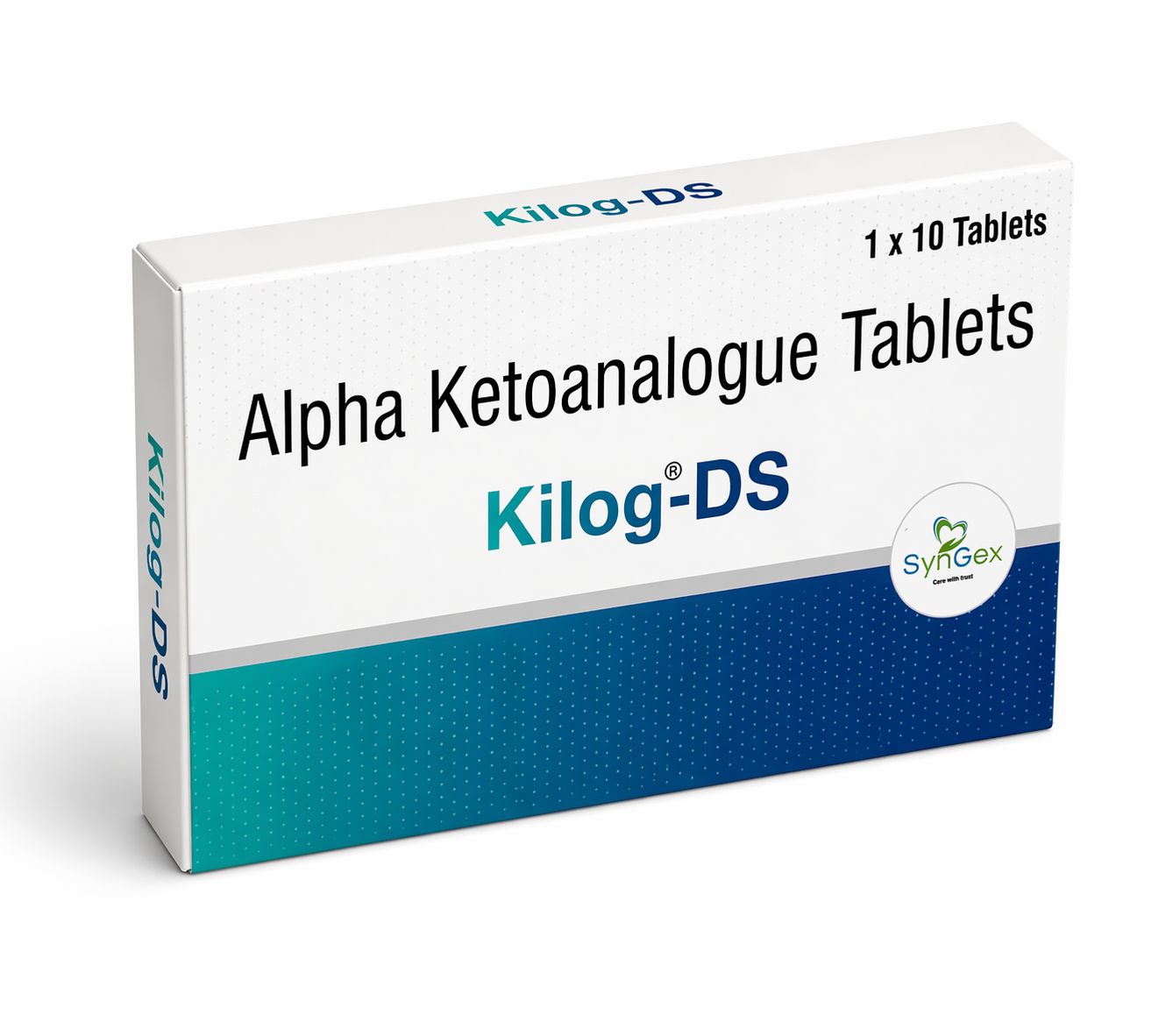
KILOG-DS
ALPHA KETOANALOGUE TABLETSMARKETER: Syngex Pharma Pvt Ltd
PRODUCT INTRODUCTION
KILOG-DS Tablet is a nutritional supplement used in the management of chronic kidney disease (CKD). It helps reduce urea levels in the blood and slows down the progression of kidney damage, thereby delaying the need for long-term dialysis. When taken as prescribed, along with a low-protein diet and adequate calorie intake, it supports better protein nutrition and reduces the buildup of harmful waste products in the body, helping improve overall health and quality of life in patients with CKD.
HOW KILOG-DS TABLET WORKS
KILOG-DS Tablet works by supplying essential keto-analogues and amino acids that help maintain protein nutrition in patients with chronic kidney disease (CKD) while minimizing the production of nitrogenous waste like urea. These components get converted into essential amino acids in the body, allowing protein synthesis without increasing the burden on the kidneys. As a result, it helps reduce urea levels in the blood, decreases the accumulation of toxic waste products, and slows the progression of kidney damage when used along with a low-protein diet.

DIRECTIONS FOR USE
Take the tablet orally, with or without food, as prescribed by the doctor.
Follow the exact dose and duration advised.
For best results, it should be taken along with a low-protein diet.
Ensure adequate calorie intake during treatment.
Regular monitoring of serum calcium levels may be required.
BENEFITS
Helps manage and slow the progression of chronic kidney disease (CKD).
Reduces the buildup of harmful waste products in the body.
Supports protein nutrition while reducing the workload on the kidneys.
Improves overall health and quality of life in CKD patients.
SIDE EFFECTS
Limited data is available on side effects.
Most side effects are mild and temporary.
Consult a doctor if any symptoms persist or cause concern.
WARNINGS & PRECAUTIONS
Inform your doctor about all other medicines you are taking.
Avoid use if you are allergic to any of its ingredients.
Do not use in case of high calcium levels (hypercalcemia).
Avoid combining with calcium supplements or certain antibiotics (e.g., tetracyclines, quinolones) without medical advice.
Pregnant and breastfeeding women should consult a doctor before use.
Patients with liver disease should use it cautiously under medical supervision.
Avoid activities requiring full alertness (e.g., driving) until you know how the medicine affects you.
Regular monitoring of calcium levels is recommended during treatment.